
Wide-Angle Lens for Astrophotography
Contents
By a stroke of luck, I was able to find a second hand wide-angle lens fitting my Canon EF mount on Xianyu, what followed changed my astrophotography shots completely.
The Lens
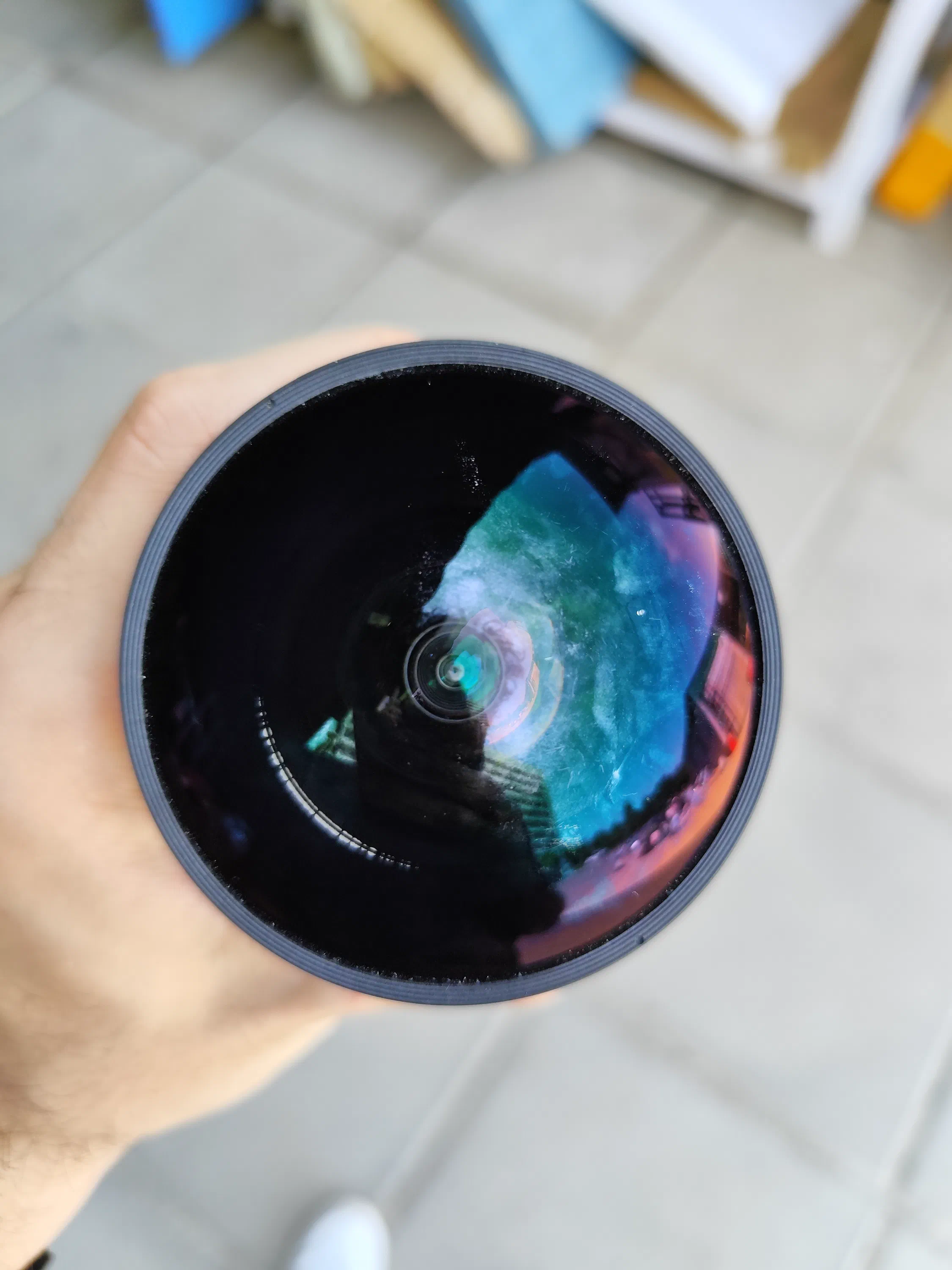
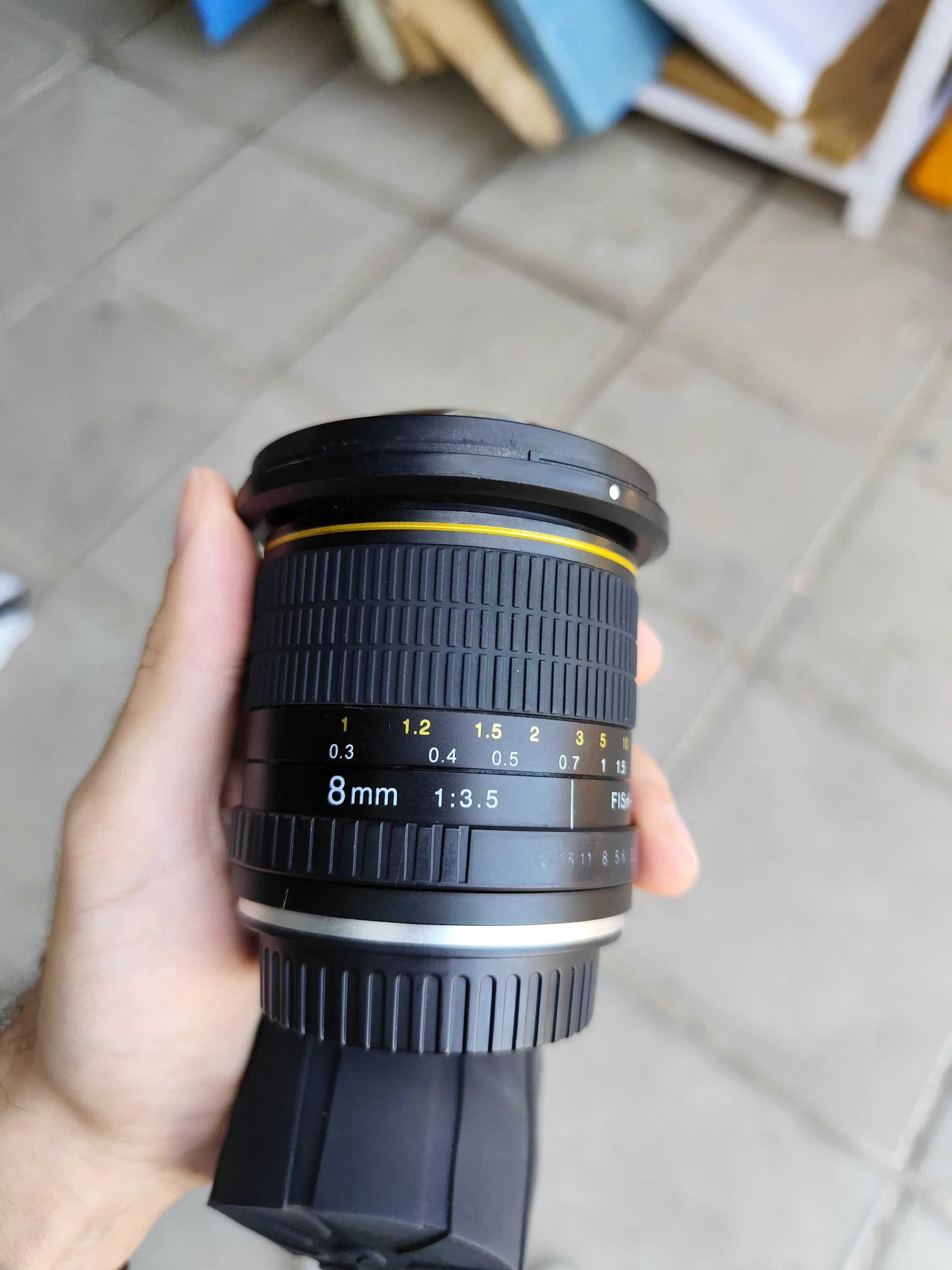
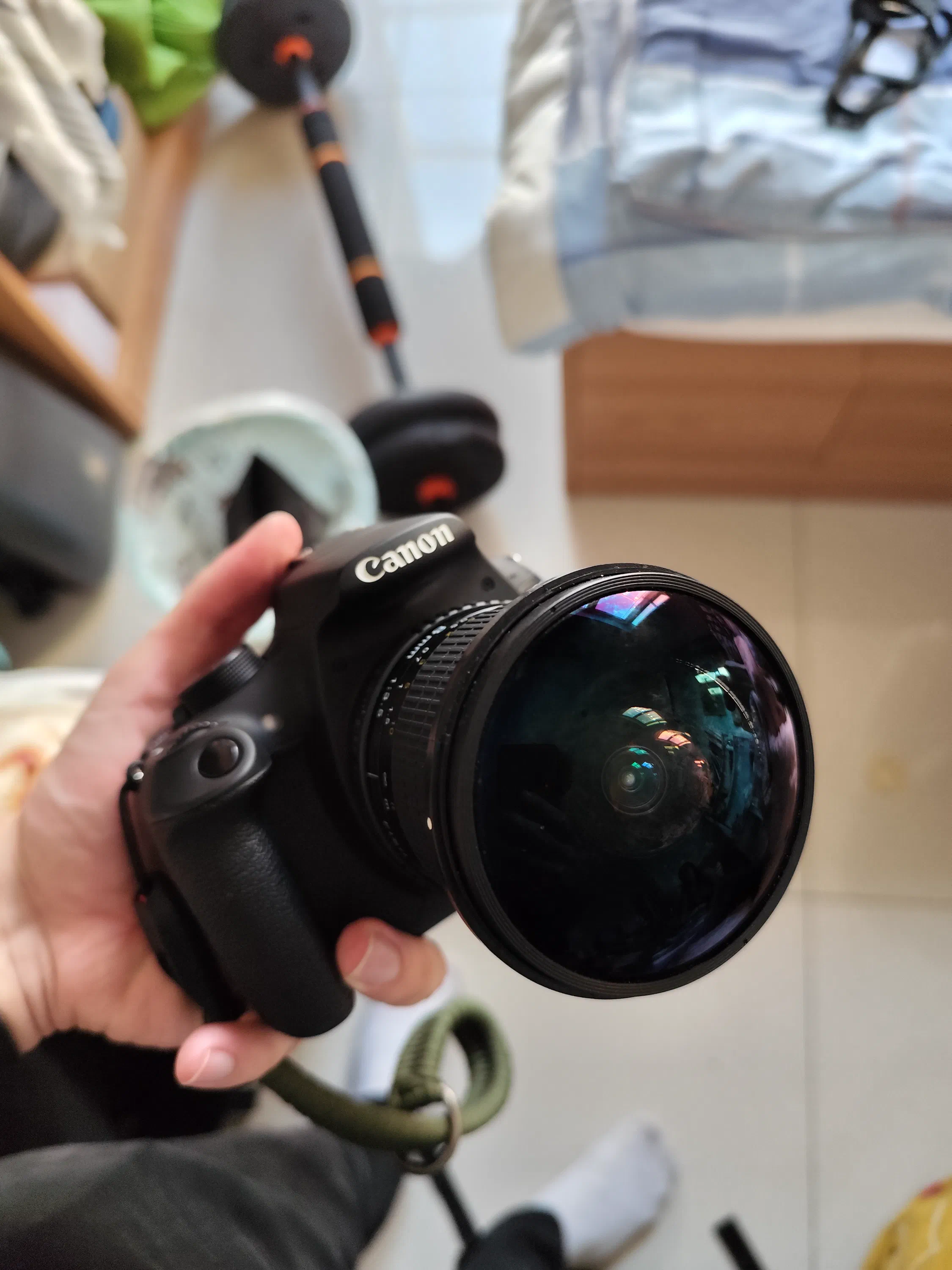
At a decent price, I obtained this Lightdow 8mm F3.5 fisheye lens. It was in overall almost perfect shape with no mold growth; which is the number one issue when purchasing second hand lenses.
The first thing I noticed when handling it for the first time, is how heavy it is due to the large glass elements. The front lens is so curved that it is imposibble to add any further attachments due to the curvature. The viewing angle is a crazy 179°, which also makes any kind of lens hood completely unfeasable as the lens would see it. Fun quirks of a wide angle lens. The seller had also lost the original lens cap, offering this silicone cover as an alternative, good enough. Overall, it felt crazy to have 8mm on a 4/3’s form-factor lens.
Wide-Angle Astrophotography
Now, when it comes to astrophotography, traditionally one wants to use a tele-photo (or telescope) with ideally a motorized equator mount which rotates the camera over time to cancel out the earth’s rotation and allow consistent tracking on a deep-sky subject. However, when shooting wide that changes.
Suddenly, you can capture everything. This means that we dont aim, and just position the camera straight up at the sky and let the 179° FOV take care of the rest; stacking in software later as needed.
I tried this lens out with my first proper astro shooting during a trip to Zhang Jia Kou in Northern China. After a tedious calibration, stacking and a touch of StarStaX; the result was beyond what I could have wished for:
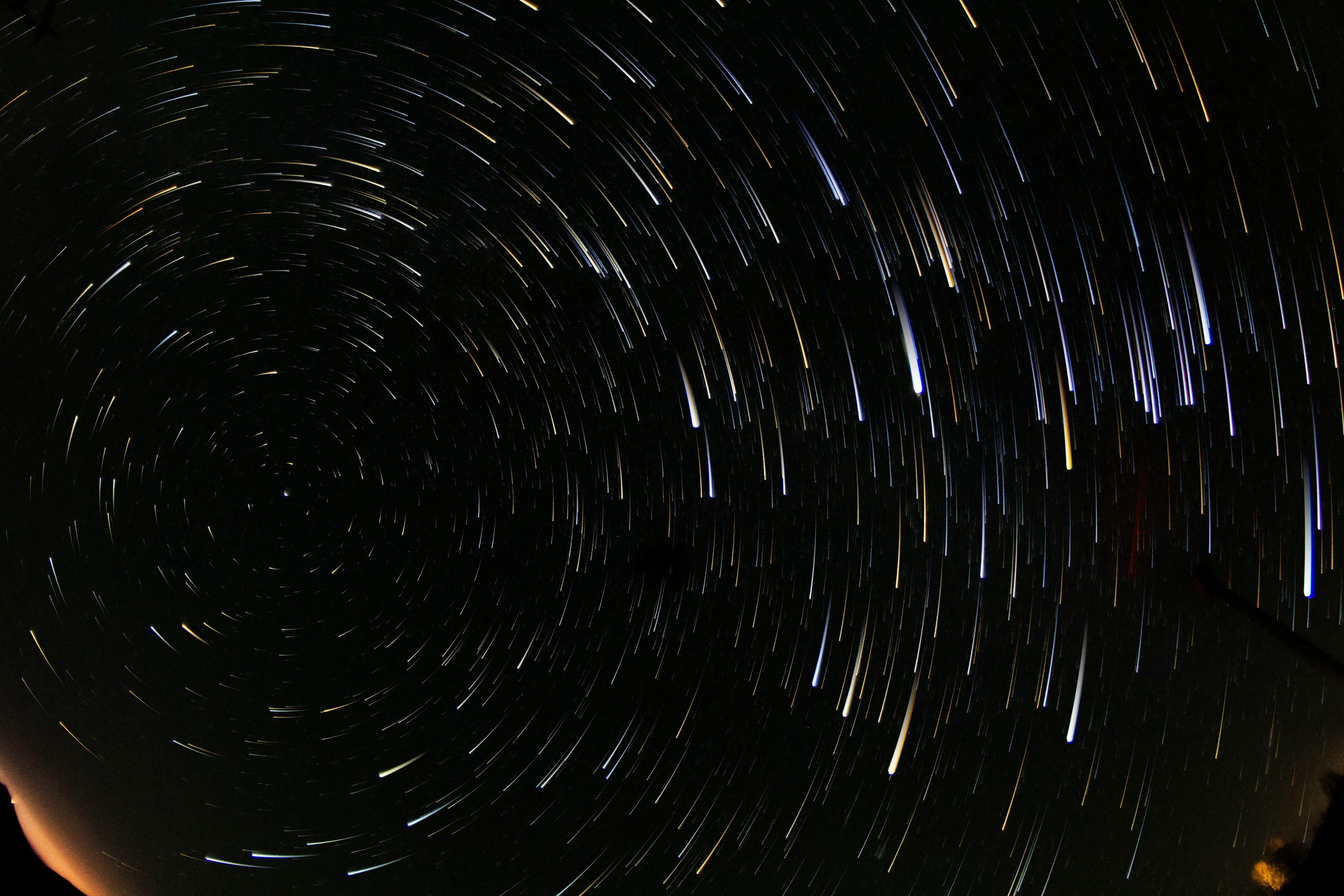
Almost the entire sky is captured at once, with bits of the horizon seen through the barrel distortion at the corners; I think the wind turbine on the lower right made a nice compliment to the composition. Sadly without a sky light filter, light pollution is visible from the nearby city of Zhang Jia Kou on the lower left, even though this was taken about 40km away. Polaris shines bright over the North pole as all the other stars seem to revolve around it. This was shot over about 8 hours with 15s exposures at 800 ISO, in the midst of winter while camping in the rental car. More details coming on my Zhang Jia Kou trip post.
The lens performed close to flawlessly, really no major complaints to give. Just one thing to watch out for is that, especially with this massive lens surface shooting in winter, it’s of upmost importance to use a good lens heater to avoid condensation build-up on the lens as dawn comes. Learned this the hard way with completely ruined shots.